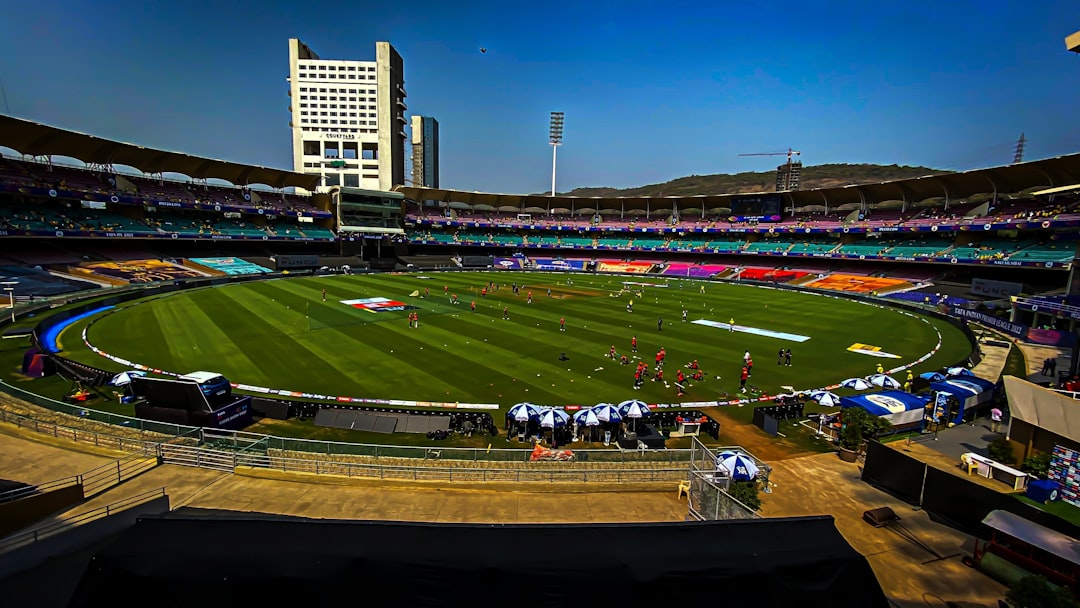
Matchday is no longer just about what happens on the pitch. The modern stadium is becoming a programmable fan platform, where experience design, identity verification, live content, and monetization can all be orchestrated in real time. That shift is being accelerated by CPaaS, 5G, and network APIs that let clubs, venues, sponsors, and ticketing teams embed communications and network intelligence directly into the fan journey. In practical terms, that means faster entry, fewer fraud losses, better in-seat services, more reliable streaming, and more relevant messaging at precisely the moments fans are most likely to engage.
The big idea is simple: if a stadium can identify a fan, locate them, understand their context, and communicate with them instantly, it can behave like a fan engine rather than a passive venue. That is where platforms like Vonage matter. As highlighted in recent recognition around its CPaaS leadership, the company’s network APIs and communications stack are designed to help enterprises embed identity verification, fraud detection, and quality on demand directly into workflows. For matchday operators, this unlocks a set of use cases that go far beyond basic SMS alerts. It is the foundation for smarter ticketing, richer hospitality, and measurable new revenue, similar to how event-driven businesses use event-led content strategy and high-trust verification workflows to win audience confidence.
Think of this guide as the stadium operator’s blueprint for turning network capability into fan loyalty and commercial return. We will look at identity and fraud controls, QoD streaming, in-seat experiences, contextual messaging, and the monetization models that make the investment pay back. We will also ground the discussion in the broader market reality: enterprise cloud services are expanding fast, and industry-specific digital transformation is increasingly defined by secure, customized integrations rather than generic software. For clubs, leagues, and venue partners, the challenge is not whether to digitize matchday. It is how to architect it so every interaction can be measured, improved, and sold.
1) Why Matchday Tech Is Moving from Apps to APIs
From one-way alerts to programmable fan journeys
Legacy stadium tech was built around one-way communication: send a reminder, display a barcode, push a score update, repeat. That model is too rigid for modern fan expectations, especially when attendees are used to seamless, personalized digital services in travel, retail, and entertainment. CPaaS changes the game by exposing communication as building blocks rather than fixed channels, so teams can create workflows that adapt to the moment. A delayed kickoff, a gate issue, or a surprise halftime activation can all trigger different messaging branches without rebuilding the whole app.
This matters because the live sports environment is volatile by nature. Fans move, lines form, weather changes, and stadium operations need to react fast. In that sense, matchday is similar to live media and other high-variability environments where trust, speed, and context determine whether the audience stays engaged. That is why concepts from live TV audience habits and streaming-driven decision windows translate so well into sports operations. The more programmable the experience, the less likely a venue is to disappoint fans during peak stress.
What 5G APIs add that ordinary connectivity cannot
Connectivity alone is not enough. 5G APIs allow venues to tap into network features such as quality on demand, device intelligence, and location-adjacent context that can support premium experiences. Instead of hoping the crowd density and bandwidth situation is stable, a venue can route certain experiences into higher-priority pathways. For example, a live replay kiosk, VIP video feed, or operational dashboard could receive QoD treatment during a congested moment. That is a major difference from standard “best effort” mobile behavior.
From a business perspective, this unlocks a tiered service model. Not every fan needs the same network profile, and not every use case has the same value. Just as SLO-driven service design helps small teams prioritize resilience, stadium operators can reserve premium network treatment for premium experiences. The result is more predictable performance where it matters most and a stronger story for sponsors who want guaranteed attention during live moments.
Why this is now a board-level conversation
Recent market signals show why this shift is accelerating. Cloud and professional services continue to expand because organizations are moving away from generic deployments and toward specialized, industry-aligned solutions. Stadium tech is following the same pattern. Clubs increasingly need domain knowledge, implementation support, and systems integration to connect ticketing, CRM, security, retail, and fan engagement into one stack. The technology is no longer a sidecar. It is core infrastructure, much like the shift seen in plantwide predictive maintenance rollouts where one pilot becomes a scaled operational capability.
That is why the strongest matchday programs are not app projects. They are operating models. They require governance, data sharing, and clear commercial ownership across the club, venue operator, sponsor, and ticketing provider. Once a team accepts that reality, CPaaS and 5G APIs become strategic tools rather than technical accessories.
2) Identity Verification and Ticketing Fraud: The First Big Win
Reducing fake tickets, duplicate scans, and account takeover
Ticketing fraud is one of the easiest matchday problems to underestimate and one of the hardest to reverse once it spreads. Fake resale listings, account takeovers, QR duplication, and bot-driven mass purchases can all damage revenue and trust. Identity verification APIs help by confirming that a buyer, transferee, or gate entrant is really the person they claim to be. In a stadium context, that can mean step-up verification at purchase, one-time passcodes at transfer, and friction-aware checks at entry.
The commercial upside is direct. Every fraudulent seat recovered is revenue protected, and every smoother entry experience reduces the risk of abandoned purchases or complaint handling. This is similar to how trustworthy digital signing workflows reduce operational risk in high-volume environments. For a useful parallel on secure workflow design, see secure digital signing at scale and response controls for mobile threats. In both cases, the trick is balancing verification strength with user convenience.
How verification can be made invisible to the fan
The best identity systems are not the ones fans notice the most; they are the ones that remove friction while quietly increasing trust. A returning season-ticket holder should not feel punished every time they enter the ground. Instead, the venue can use risk-based verification: low-risk users get a seamless flow, while suspicious transactions trigger stronger checks. This mirrors best practice in many digital ecosystems where risk scoring drives step-up authentication only when needed.
In practical matchday design, that can mean one-click wallet tickets for known devices, soft biometric validation for premium areas, and silent device reputation checks before a fan ever reaches the gate. Done well, this reduces queue length and protects conversion. Done badly, it creates customer service disasters and social media backlash. The lesson is the same as in other trust-sensitive categories: trust is built through consistency, not just security theater.
Fraud prevention is also a monetization lever
Clubs often treat fraud prevention as a cost center, but that is too narrow. If a verified fan can be confidently recognized across the stadium journey, the venue can offer safer resale, controlled transfers, and premium access experiences. That means the identity layer can support upsells rather than just reducing losses. It also enables dynamic pricing on legitimate transfers and more accurate fan segmentation for marketing campaigns.
There is also a merchandising implication. Once a fan identity is persistent and verified, the stadium can connect ticketing to retail profiles, loyalty programs, and limited-edition drops. That is where matchday begins to resemble the logic behind risk-aware merch strategy and fan gear sourcing decisions. Verified identity is not only about admission. It is the key that unlocks lifetime value.
3) Quality on Demand: Making Streaming and In-Venue Video Feel Premium
Why QoD matters for replays, control rooms, and VIP experiences
When fans think of 5G, they often think of speed. In reality, the more important use case for matchday may be quality on demand. QoD enables venues to prioritize traffic for specific applications during congestion, helping critical video, operational, or VIP services perform reliably. That matters in a packed stadium where thousands of fans are trying to post clips, scan tickets, and stream replays at the same time.
For the fan, QoD can power smoother in-seat video, instant highlight playback, and better second-screen experiences. For staff, it can stabilize stewarding tools, surveillance feeds, and incident response dashboards. This is a practical use of network intelligence, not a gimmick. Like wearable data in performance coaching, the goal is to convert raw signals into useful decisions under pressure.
How teams can package premium digital tiers
Premium digital tiers are the next frontier of matchday monetization. A club can bundle better connectivity, live multi-angle video, richer stats overlays, or sponsor-backed experiences for hospitality buyers and loyal fans. The value proposition is not just “faster internet.” It is “guaranteed quality for the moments you care about most.” That subtle shift in wording is commercially important because people pay for certainty, not abstract bandwidth.
In other sectors, premium service layers are already common. Travel brands use tiered experiences, and content companies optimize around event moments. Stadium operators can learn from hotel loyalty packaging and flight value protection, where the perceived value comes from predictability and control. A matchday pass that promises better replay delivery in your seat can be as compelling as a lounge upgrade.
QoD is also an operations tool
The most overlooked benefit of QoD is internal. Stadium operations are full of latency-sensitive processes: incident management, access control, cashless point-of-sale terminals, staff communications, and production teams moving rapidly between zones. If a network can prioritize these tools during peak congestion, the venue becomes more resilient. That can reduce operational downtime, shorten issue resolution, and protect the event flow when crowd density is highest.
This is where the venue becomes more than a place of entertainment. It becomes a real-time network environment with business rules. A good operator should think of QoD the way an engineering team thinks about capacity planning. If you want the deeper systems perspective, resource scarcity and reliability maturity provide a helpful framing: performance has to be designed, not hoped for.
4) In-Seat Experiences: The Stadium as a Personalized Service Layer
Ordering, upgrades, and frictionless service
In-seat experiences are where technology becomes tangible to fans. If a supporter can order food, request merchandise, or upgrade hospitality from their seat without leaving the action, that turns downtime into revenue. CPaaS supports this by enabling contextual prompts, delivery notifications, and two-way messaging. The result is a service layer that feels responsive rather than invasive.
The venue gains more than convenience metrics. It gets better basket size, more accurate demand forecasting, and fewer congested concession queues. That is the same logic behind businesses that win by being present at the right moment with the right offer. It is not unlike why delivery dominates dine-in when convenience is king: if the experience is easier, people buy more.
Personalized offers tied to match context
Context matters. A fan in the north stand during a rain delay does not need the same message as a VIP guest entering halftime. With the right APIs, a club can segment by seat zone, match phase, purchase history, loyalty tier, and behavior. That enables offers such as “order now and get delivery before the next innings,” “upgrade to covered seating,” or “claim a sponsor reward within 10 minutes.” The timing is the product.
To make this work, the team needs a clean data model and strong consent management. The risk is over-messaging, which fans will quickly punish. But if the communication feels useful, it improves both sentiment and revenue. For inspiration on structured audience activation, look at micro-event monetization and experience-first market strategy. Fans respond when the activation matches the moment.
Operationalizing fan convenience at scale
What sounds simple at a 5,000-seat venue becomes complex at 60,000 seats. Systems have to handle message delivery, payment authorization, seat mapping, inventory, and customer support in real time. That is where CPaaS matters most because it provides programmable channels that can be stitched into the venue’s wider stack. The stadium does not need one giant monolith; it needs composable services that can be orchestrated cleanly.
That approach also makes experimentation easier. A club can test different offers for different stands, compare conversion by match type, and refine messaging by time window. In other words, in-seat experience becomes a data product. This is especially valuable for clubs looking to create repeatable matchday revenue rather than relying on a handful of premium fixtures.
5) Contextual Messaging: Turning Real-Time Signals into Revenue
From generic push notifications to actionable moments
Most clubs already send app alerts, but too many are blunt and untimed. Contextual messaging uses live signals such as location, ticket type, game state, weather, queue conditions, and inventory to send messages that actually help. A message saying “merch store queue is under 2 minutes” is far more useful than a generic coupon blast. A notification that a gate is congested or that a highlight package is ready can change behavior instantly.
There is a strong analogy here to live publishing. In fast-moving environments, audience trust is earned through relevance and speed, not volume. That is why editors and operators alike benefit from lessons in ethical amplification and verification-first communication. Stadium teams should ask the same question: does this message help the fan in this minute?
How contextual messaging drives sponsor ROI
Contextual messaging is one of the strongest monetization tools because it can convert sponsor inventory from generic impressions into utility-based offers. A beverage partner can target halftime buyers, a mobility partner can target exit traffic, and a merchandise sponsor can target post-win celebration windows. When the message is aligned with fan intent, conversion rises and wasted impressions fall. This makes sponsorship less about static signage and more about measurable activation.
That shift also creates stronger renewal discussions. Sponsors can see not just reach, but action. Clubs that can report response rates, redemption rates, and assisted conversions have a much more valuable rights inventory. This mirrors broader digital commerce trends, where stacked offers and event-driven attention cycles outperform static campaigns.
Messaging governance prevents fan fatigue
Powerful messaging tools can become noisy fast if governance is weak. Clubs should define message caps, frequency rules, and priority tiers before launching. The best systems distinguish between critical alerts, service nudges, and promotional offers. Fans may tolerate several useful alerts per match, but they will not tolerate a constant stream of marketing interruptions.
This is another area where structured operations matter. It helps to think in terms of decision trees, audience segments, and escalation paths rather than a simple broadcast list. If a club builds its messaging platform properly, it can protect trust while still monetizing attention. That balance is the whole point of fan-first design.
6) The Monetization Model: How Teams Actually Make Money
Direct revenue streams
There are at least four direct revenue streams from network-powered matchdays. First, premium connectivity or QoD-based fan upgrades can be sold as part of hospitality or membership bundles. Second, in-seat commerce can lift food, beverage, and merchandise spend. Third, identity-verified resale or transfer fees can create a safer secondary market. Fourth, sponsor-funded contextual activations can command higher CPMs because they are tied to behavior, not just exposure.
These streams are especially attractive because they are additive. A fan who buys a ticket may also spend on food, buy merchandise, and opt into a premium digital feature. The stadium is no longer selling one event; it is selling a series of micro-experiences. That is the same principle behind high-performing event monetization systems in media and seasonal experience plays in retail.
Indirect value: retention, data, and lifetime value
Some of the biggest gains are indirect. Better entry flow improves satisfaction, which improves repeat attendance. Better messaging creates more engaged users, which improves loyalty participation. More reliable video and service delivery reduces frustration, which protects brand equity. These improvements compound over time and matter enormously in sports, where emotion drives repeat purchase behavior.
For clubs, this means the economics should be evaluated across lifetime value rather than isolated matchday revenue. A better first-time visitor experience can lead to season-ticket interest, merch purchases, and app retention. A premium fan who trusts the venue’s identity and communication stack is also more likely to buy digitally in the future. That is why trust infrastructure is commercial infrastructure.
Partnership models and revenue share
Most teams will not build everything themselves. The viable commercial model often involves a mix of club, venue operator, telco, CPaaS provider, systems integrator, and sponsors. In some cases, the telco supplies network capabilities and the club owns the fan layer. In others, the club licenses a white-label experience platform with revenue-share components. The right model depends on control, capital, and data ownership requirements.
Because the ecosystem is complex, implementation often benefits from specialist support similar to industry-specific cloud engagements. The strongest programs usually align technology with a clear operating contract: who owns the data, who supports the fan, who underwrites the network experience, and how revenue gets split. For teams planning these builds, the strategic lesson from enterprise transformation is clear: the best outcomes come from domain expertise plus integration discipline.
7) A Practical Stadium Tech Stack for 2026
Core building blocks
A modern matchday stack should include identity verification, messaging orchestration, event-trigger logic, payment integration, CRM synchronization, analytics, and network intelligence. CPaaS acts as the communications glue, while 5G APIs add network-level context and prioritization. Ticketing systems feed the event data, and fan apps or web experiences expose the interface. The more modular the architecture, the faster the venue can adapt to new commercial ideas.
Below is a practical comparison of common matchday capabilities and how network APIs improve them:
| Matchday Capability | Traditional Approach | CPaaS/5G API Approach | Business Impact |
|---|---|---|---|
| Entry verification | Static QR scan only | Risk-based identity verification with step-up checks | Lower fraud and smoother gates |
| Fan communication | Generic push notifications | Contextual, event-triggered messaging | Higher engagement and conversion |
| Connectivity | Best-effort mobile service | Quality on demand for key apps | Premium streaming and operations reliability |
| In-seat commerce | Manual ordering or separate apps | Integrated seat-aware ordering and notifications | Higher basket size and faster service |
| Sponsor activation | Static signage and broad campaigns | Behavior-timed offers and redemptions | Better ROI and measurable attribution |
| Secondary ticket transfer | Loose resale marketplace controls | Verified transfer with controlled identity checks | Lower abuse and cleaner data |
Data and governance requirements
Technology will fail if governance is weak. Stadiums need policies around consent, retention, access control, and incident response. They also need a clear view of which fan data is used for service improvements versus commercial targeting. Fans are increasingly aware of privacy trade-offs, and operators that cannot explain their data use will struggle to earn trust. This is where transparent communication becomes a competitive advantage.
Good governance is not a blocker to innovation; it is what makes innovation scalable. Teams that define boundaries early can move faster later because they avoid legal and reputational surprises. For a mindset guide, it helps to study how other industries handle trust-sensitive systems, including high-compliance monitoring and trust failure dynamics. If fans do not trust the platform, the platform does not matter.
Implementation sequencing
The smartest path is usually phased. Start with a high-value use case such as identity verification or service alerts, prove ROI, then expand into QoD and sponsor activations. Once the operational model is stable, introduce advanced personalization and premium connectivity offers. Trying to do everything at once usually creates integration friction and weak adoption.
A phased rollout also makes internal buy-in easier. Finance wants measurable savings, marketing wants engagement, operations wants stability, and commercial wants revenue. A staged program can satisfy each stakeholder in turn. In short, matchday transformation should be delivered like any serious business capability: small proof, clear learning, then scale.
8) What Great Matchday Execution Looks Like in Practice
Example journey: from ticket purchase to post-match conversion
Imagine a fan buys two seats for a marquee derby. At purchase, the system performs identity verification to reduce fraud risk. On arrival day, the fan receives a contextual gate reminder and a parking prompt based on venue conditions. As they enter, the app recognizes their loyalty tier and offers a seat upgrade if inventory opens up. During the match, they get a QoD-backed replay stream and a food offer when the queue drops below a threshold. After the final whistle, they get a merchandise offer timed to the win and a travel message based on exit congestion.
That single journey shows why matchday tech is more than operations. It is an orchestrated lifecycle with multiple monetizable moments. Each interaction is small, but together they create a feeling of service and attention that fans remember. This is the same logic that powers successful mobile-first business experiences and high-conversion app interfaces.
What to measure
Teams should avoid vanity metrics. The right KPIs include fraud attempts prevented, gate throughput, message open-to-action rate, in-seat conversion, premium connectivity uptake, sponsor redemptions, support tickets avoided, and post-match retention. These numbers connect technology to business outcomes. Without them, every platform looks successful and none of them are.
It also helps to benchmark against operational baselines before launch. If you cannot prove that queue times fell or conversion rose, you cannot justify expansion. Measurement discipline turns innovation from a one-off campaign into a repeatable business system.
Common failure modes to avoid
The biggest failure mode is building a flashy app without the underlying network and identity infrastructure. The second is launching too many prompts and confusing fans. The third is failing to coordinate across departments, which creates fragmented experiences. The fourth is underestimating support, because even the best system will need edge-case handling on matchday.
Another common mistake is ignoring merchandising and post-event monetization. If the venue only thinks about entry and halftime, it misses the most valuable moments before and after the event. A truly network-powered matchday understands that fan value extends across the entire day.
9) Why the Business Case Is Strong Now
Market momentum favors programmable experiences
The broader enterprise market is moving toward specialized, API-driven platforms. Cloud professional services are growing because organizations need tailored integration, not off-the-shelf deployment. Stadiums have the same need. They operate at the intersection of mobility, identity, media, commerce, and physical operations, which makes them ideal candidates for composable architecture.
At the same time, fan expectations keep rising. People are used to instant verification, personalized recommendations, and frictionless service in other parts of their lives. A venue that cannot keep up feels dated, even if the team on the field is world-class. That is why matchday transformation is no longer optional for ambitious clubs.
Competitive differentiation is now experiential
Winning teams increasingly compete on the quality of the full day, not just the scoreline. A stadium that makes entry easier, service faster, and messages smarter creates a better memory. That memory drives repeat attendance and word-of-mouth. In sports, reputation travels fast, and a better fan experience can become a brand moat.
There is also a sponsorship angle: brands want environments where attention is measurable and positive. If a venue can prove that fans are engaged, verified, and responsive, it becomes easier to sell premium partnerships. The technical stack becomes a commercial asset, much like how creators and publishers monetize high-intent events around audience attention cycles.
The opportunity for clubs, leagues, and venue operators
Clubs can use CPaaS and 5G APIs to modernize without replacing everything at once. Leagues can create standards and reusable templates. Venue operators can expose premium service tiers across multiple tenant events. Sponsors can buy more targeted activations. Fans get a better experience, and the ecosystem gains a common language for value creation.
That is the real promise of network-powered matchdays. It is not just about faster messages or cooler screens. It is about building a stadium that can sense, respond, and monetize in real time.
Pro Tip: Start with one painful problem that fans already feel — ticketing fraud, slow entry, or unreliable in-seat connectivity — and prove that an API-based fix improves both satisfaction and revenue before scaling to the full matchday journey.
10) The Strategic Playbook: How to Launch Without Overbuilding
Phase 1: Choose one revenue-protecting use case
Begin where risk is easiest to quantify. Identity verification for ticket purchase and transfer is often the best first project because it protects revenue and is easy to explain to executives. If that is already mature, choose service alerts or queue management. The key is to create an early win that proves the architecture.
Small, visible improvements build internal confidence. They also generate the operational evidence needed to unlock budget for QoD or premium messaging later. This is how ambitious programs move from pilot to platform.
Phase 2: Layer in contextual engagement
Once the base is working, introduce targeted messaging and in-seat commerce. At this stage, the club can begin segmenting by location, loyalty, and match context. Offers should be useful first and commercial second. If fans feel helped, they are more likely to engage when the offer appears.
It is useful to borrow from the playbooks that work in other high-attention environments: timing, relevance, and moderation. That is why viewing-party orchestration and live demo activation are such useful analogies. Fans respond when the moment is designed around them.
Phase 3: Add premium network services and sponsorship packages
Once trust is established, monetize quality. Premium streaming, VIP connectivity, sponsor-backed data boosts, and guaranteed service tiers can all become sellable features. The most important thing is to frame them as experience upgrades, not technical features. Fans buy outcomes.
At this stage, the club can also negotiate better sponsor packages based on verified interaction data. The better the measurement, the more confidence partners have in the ROI. That is how a stadium evolves from a venue into a performance platform.
FAQ
What is CPaaS in a matchday context?
CPaaS is a communications platform that lets stadiums embed messaging, verification, voice, and engagement features into apps and workflows using APIs. In matchday settings, that means things like ticket confirmations, queue alerts, in-seat ordering, and fraud prevention can all be automated and personalized.
How do 5G APIs improve the in-stadium experience?
5G APIs can expose network capabilities such as quality on demand, which helps prioritize traffic for key experiences like live video, operational tools, or premium fan services. The result is better reliability during congestion and a more consistent experience for both fans and staff.
Can identity verification really reduce ticketing fraud?
Yes. Identity verification can help confirm buyers, transfers, and entrants are legitimate, which reduces fake tickets, duplicate scans, and account takeover abuse. It also enables safer resale and more controlled ticket transfers.
How do clubs monetize matchday APIs without annoying fans?
The best approach is to use contextual, useful messaging and sell premium experiences rather than spam promotions. Monetization works best when it improves the fan journey, such as faster service, better connectivity, or timely offers tied to real match conditions.
What should a team measure after launching matchday tech?
Track fraud prevented, gate throughput, message conversion, in-seat spend, premium service uptake, sponsor redemption, support tickets avoided, and retention. Those metrics show whether the platform is improving both experience and revenue.
Should every stadium build its own matchday stack from scratch?
No. Most venues should use modular, API-driven components and integrate them into existing ticketing, CRM, and operations systems. That keeps implementation faster, lower-risk, and easier to scale across multiple events or venues.
Conclusion: The Stadium Is Becoming a Software Product
The future of fan engagement is not just more content or more screens. It is smarter orchestration. CPaaS and 5G APIs make it possible to verify identities, protect against ticketing fraud, deliver QoD-powered streaming, personalize in-seat experiences, and send contextual messages that fans actually value. That combination turns the stadium into a dynamic fan engine where every interaction can be measured and monetized.
For clubs and venue operators, the strategic question is no longer whether to invest in matchday tech. It is where to start, how to sequence the rollout, and which partner model best balances control with speed. The organizations that treat the stadium as programmable infrastructure will set the standard for the next era of fan engagement. Those that do not will keep selling tickets into an experience gap that only gets wider.
For further perspective on how adjacent industries are rethinking trust, service, and monetization, explore trustworthy AI governance, AI search for demand expansion, and merch risk management. The lesson across all of them is the same: programmable systems win when they improve real human experience.
Related Reading
- Event-Led Content: How Publishers Can Use Conferences, Earnings, and Product Launches to Drive Revenue - A playbook for turning live moments into measurable growth.
- Newsroom Playbook for High-Volatility Events: Fast Verification, Sensible Headlines, and Audience Trust - A strong framework for trust-first real-time communication.
- Measuring reliability in tight markets: SLIs, SLOs and practical maturity steps for small teams - Useful for designing dependable fan-facing services.
- Building Trustworthy AI for Healthcare: Compliance, Monitoring and Post-Deployment Surveillance for CDS Tools - A rigorous model for governance in sensitive systems.
- How to Build a Procurement-Ready B2B Mobile Experience - A practical guide to building enterprise-grade mobile journeys.