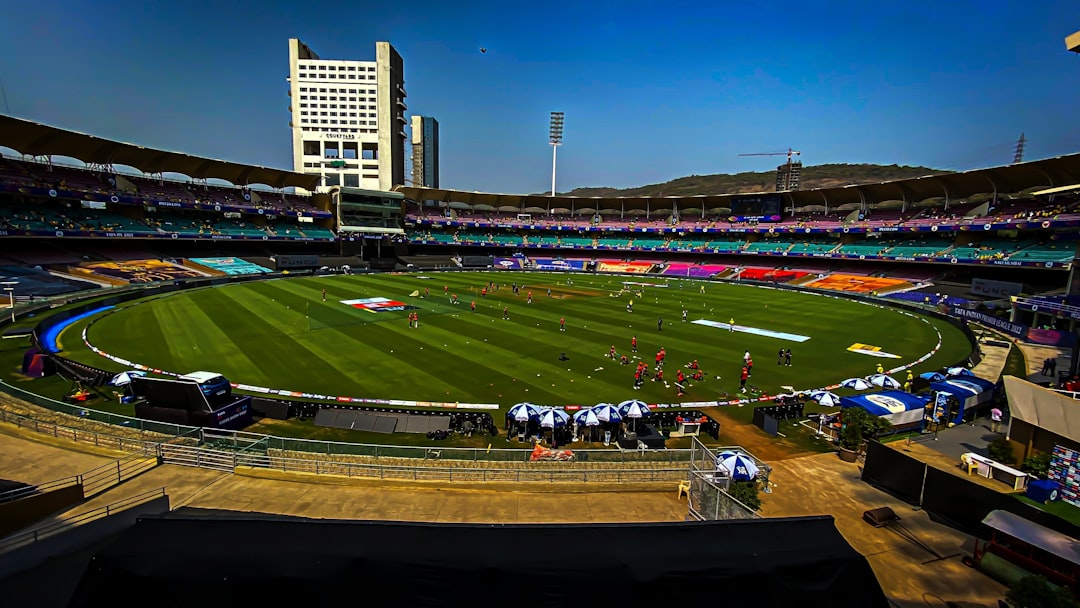
Cricket boards and councils are under more pressure than ever to prove that every dollar spent on grounds, pavilions, lighting, drainage, and shared community infrastructure will deliver measurable participation, better events, and stronger local pride. The old playbook of upgrading venues because they “feel needed” is no longer enough, especially when budgets are tight and stakeholders want evidence, not anecdotes. That is exactly why the lessons from Athletics West’s evidence-led state facilities planning matter for cricket: they show how participation data, demand forecasting, and multi-use thinking can turn capital investment into a defendable strategy rather than a political gamble. If you want a practical lens on how fans experience venues and why facility decisions shape attendance, the logic behind reading live scores like a pro applies here too: people engage more deeply when the system is easy to follow, reliable, and built around their needs.
The central takeaway is simple. Facilities planning should not begin with a wishlist of projects; it should begin with participation data, event usage patterns, geographic access, and a forecast of how people will actually use the venue over time. That’s how councils justify capital spend, how cricket associations prioritize upgrades, and how communities get stadiums and ovals that work on match day, training night, school sport day, and even off-season community events. In practice, the strongest plans are the ones that combine hard numbers with stakeholder buy-in, just like councils do when they use industry data to back better planning decisions. When the evidence is clear, the conversation moves from “Can we afford this?” to “Can we afford not to do it?”
Why evidence-based facilities planning changes the cricket conversation
From anecdote to allocation
Most cricket infrastructure debates start with a familiar pattern: clubs say they are full, local government says there are competing priorities, and everyone points to a facility that “just needs a bit of work.” That approach creates noise, not clarity. Evidence-based planning replaces that noise with a shared language built on participation trends, catchment mapping, age-group growth, female participation, and venue utilization. Once you can show who is playing, where they are playing, when they are being turned away, and which venues are over- or under-used, capital decisions become much easier to rank.
A good facilities plan should also account for how demand evolves across seasons and formats. Cricket is no longer just one sport played one way, at one time, by one demographic. Junior softball-style crossover participation, women’s programs, short-format evening cricket, school partnerships, and social competitions all create different scheduling pressures. If you’re thinking about how fans and participants consume content and time-sensitive information, the same principle appears in real-time stats and live scoring: relevance depends on precision, timing, and context.
What Athletics West got right
The most valuable insight from Athletics West’s approach is that a statewide plan works when it is grounded in participation and demand data rather than generic facility standards alone. That matters for cricket because not every region needs the same type of upgrade. A metropolitan ground with heavy junior, senior, and district overlap may need drainage, lighting, and change room expansion, while a regional venue may get better returns from turf wicket rehabilitation, portable seating, or a second training oval. Evidence-based planning makes those trade-offs visible and defensible.
The active ingredient here is not just data collection; it is data interpretation. ActiveXchange’s role, as described in their success stories, is to help sport and recreation leaders move from gut feel to evidence-based decision-making. That is a crucial distinction for cricket administrators, because capital projects often fail when they are framed as isolated upgrades rather than components of a wider participation strategy. For a broader look at how organizations use data to prove impact, see ActiveXchange success stories, which show how councils and sporting bodies are using analysis to support growth, inclusion, tourism value, and future planning.
Why fans feel the difference
Fans may never read a facilities report, but they experience the results immediately. Better parking, smoother entry, accessible amenities, clearer wayfinding, improved sightlines, and reliable surfaces all reduce friction. The less friction there is, the more likely families are to return, local supporters stay longer, and community events feel worth attending. Venue experience is a competitive advantage, especially in a sports market where people can choose to watch from home, switch platforms, or avoid travel if the live experience feels clunky. That’s why affordable essentials for enjoying cricket matches live matter too: fans value comfort, convenience, and practicality.
How to build a cricket facilities plan that boards and councils can defend
Start with participation and capacity mapping
Every credible plan starts by answering three questions: how many people play, where do they play, and what stops them from playing more? That means mapping club registrations, school participation, growth in women’s and girls’ cricket, informal participation, and latent demand in underserved suburbs or towns. Then compare that against venue capacity, pitch availability, lighting hours, changeroom capacity, surface quality, and seasonal usage. The objective is to see where demand already exceeds supply and where a modest upgrade could unlock a disproportionate participation gain.
This is where forecasting becomes more than a spreadsheet exercise. A robust model should include population growth, demographic shifts, transport access, housing development, and competing land use pressures. Councils often underestimate how quickly a neighborhood’s sporting needs change when apartment density rises or a new school opens nearby. For a useful planning analogy, think of why five-year forecasts fail when they ignore changing behavior; sports infrastructure can fall into the same trap if it assumes tomorrow looks like today.
Prioritize upgrades by bottleneck, not by tradition
One of the biggest planning mistakes is upgrading what is visible instead of what is constraining usage. A shiny pavilion means little if poor drainage makes the oval unplayable after rain or if lighting limits training access during winter. Likewise, extra seating at a venue with weak access roads, inadequate toilets, or no female-friendly change rooms will not deliver the utilization increase stakeholders expect. The question should always be: what is the bottleneck preventing more cricket, better experiences, or broader community use?
In practical terms, the highest-value cricket investments often include lighting, pitch and outfield improvements, gender-inclusive changerooms, storage, accessibility upgrades, and flexible spaces that support multiple user groups. Those are the projects most likely to improve actual usage, not just asset appearance. This is where the evidence-based mindset echoes the logic behind evaluation in theatre productions: the best investments are the ones that improve the audience’s experience and the organization’s performance simultaneously.
Build a capital story that speaks finance, sport, and community
Stakeholder buy-in rarely comes from technical plans alone. Boards and councils need a narrative that connects participation forecasts to community outcomes, economic activity, volunteer retention, female participation, and event hosting potential. If a venue upgrade can support more junior training hours, bigger finals events, school carnivals, and summer community rentals, it is easier to justify capital spend because the benefits are visible across multiple portfolios. This is especially true when the plan can show how cricket facilities also support neighborhood activity outside peak cricket windows.
That cross-sector argument is exactly why data-backed planning resonates with councils. It shifts the project from a single-sport request to a shared public asset proposition. Similar ideas appear in how councils use industry data to back better planning decisions, where evidence helps align sport, recreation, finance, and community outcomes. For cricket, that alignment is often the difference between an aspirational plan and a funded one.
Multi-use stadiums: how to schedule facilities for maximum return
Think calendar, not just construction
Multi-use stadiums and grounds are no longer a nice-to-have; they are a financial necessity in most markets. A cricket venue that only works for weekends in summer leaves value on the table. Better planning schedules the same space for training, women’s competitions, junior development, school sport, community events, concerts, markets, and even non-ticketed gatherings where feasible. This increases revenue potential, supports community reach, and improves the political case for public investment.
The scheduling challenge is not simply about filling idle time. It is about designing surfaces, circulation, storage, and amenities so that different users can share the venue without destroying the cricket experience. That means considering turf protection, modular seating, temporary fencing, lighting controls, and maintenance windows from day one. If you want a broader view of flexible scheduling logic, the way group reservations adapt to modern travelers offers a useful analogy: the venue must fit different user groups without collapsing operational efficiency.
Protect cricket quality while enabling broader use
Multi-use does not have to mean compromised cricket conditions. The trick is to define use rules based on surface sensitivity, recovery time, and peak competition windows. For instance, a council might allow summer twilight programs and off-peak community hires on the outfield while protecting the wicket square in the critical preparation phase before key matches. In high-demand venues, the scheduling matrix should distinguish between “hard no,” “conditional yes,” and “open access” periods to avoid conflict and preserve playing quality.
Data is the difference between clever policy and operational chaos. Usage logs, booking records, match calendars, and maintenance data should sit in one planning view so administrators can see whether the venue is being over-scheduled or underperforming. That approach fits naturally with ActiveXchange’s evidence-based decision support, where facility leaders can test assumptions against real usage patterns rather than relying on memory or lobbying pressure.
Design for flexibility without losing identity
Some communities fear that multi-use planning will dilute cricket identity. In reality, the best multi-use venues strengthen the identity of cricket by making the site busier, more welcoming, and financially stable. A venue that hosts markets on non-match days can fund better lighting. A facility with shared meeting rooms can support club administration, community workshops, and sponsor activations. A grandstand with accessible amenities can host finals, corporate hospitality, and local celebrations without sacrificing the feel of a true cricket ground.
This is where fan experience and facility planning meet. A venue that feels active and cared for draws people in. The same principle appears in live performance and audience connection: people respond to environments that feel intentional, energetic, and human. Cricket venues should aim for that same emotional pull, because atmosphere is part of the product.
Turning participation forecasts into capital investment cases
Forecast demand in layers
Strong forecasts should work at multiple levels. First, estimate broad population-driven participation: how many players might enter the system if facilities improve? Second, estimate retention: how many current players will stay if access improves and the experience gets better? Third, estimate substitution: how many users will shift from adjacent venues once a new or upgraded facility offers better quality or better access. Each layer helps paint a more realistic picture of the return on investment.
Forecasts also need scenario planning. A conservative case, a likely case, and a growth case make the capital discussion more credible because they show how the venue performs under different conditions. This matters in cricket because growth is rarely linear; it is influenced by school partnerships, coach availability, weather, regional development, and competition formats. For a practical analogy on how market assumptions change outcomes, see how to turn AI travel planning into real savings, where better inputs lead to better decisions.
Show the cost of inaction
A compelling capital case does not only describe benefits; it quantifies the cost of doing nothing. That includes participation lost because venues are full, revenue lost because bookings are capped, higher maintenance costs from deferred repair, and reputational cost when women’s and girls’ teams lack appropriate facilities. It may also include the opportunity cost of missing out on regional finals, community events, or school sport partnerships because the venue does not meet minimum standards. When these losses are made visible, upgrades stop looking optional.
Boards should also tie in broader community outcomes, especially where sport is a lever for health, belonging, and social cohesion. ActiveXchange’s success stories repeatedly point to the value of movement data and sport infrastructure in relation to community outcomes and participation trends. That framing gives cricket a stronger public-interest case than “we need a nicer ground.” It becomes a discussion about community capacity, not just sport convenience.
Use evidence to win stakeholder buy-in
Stakeholder buy-in is not about convincing everyone to love every element of a plan. It is about creating enough shared confidence that the right decisions can move forward. The strongest way to do that is through transparent methods, easy-to-read visuals, and a clear explanation of assumptions. If local government finance teams, club leaders, disability access advocates, and school partners can all see their priorities reflected in the plan, resistance drops sharply.
In many cases, the plan’s credibility will come from the process as much as the final recommendation. That is why case studies showing evidence-based sport planning are so useful: they demonstrate that data-led planning is not theoretical. It has already helped organizations strengthen decision-making, improve customer experience, and justify design modifications that improved financial performance.
What cricket venues must deliver beyond the playing surface
Arrival, access, and fan comfort
Facility planning is not just about the oval. Fans judge the venue from the moment they approach it: parking, public transport access, pedestrian safety, signage, toilets, shade, food options, and entry flow. A venue can have an excellent pitch and still feel underwhelming if the arrival experience is frustrating. For families especially, the difference between a good day and a stressful one is often basic infrastructure done well.
That’s why venue planning should include accessibility from the street to the seat. Inclusive ramps, tactile wayfinding, accessible toilets, hearing-friendly communication options, and family spaces are not “extras”; they are core attendance drivers. If you’re thinking in fan-first terms, match-day essentials matter because comfort and convenience shape whether people come back.
Commercial and community activation
Modern cricket venues need to earn their keep through both sport and hospitality. Food and beverage zones, sponsor activations, merchandise areas, corporate rooms, and community meeting spaces all help create a richer revenue mix. These spaces also improve the emotional experience for fans because they turn the venue into a destination rather than just a field with seats. Well-designed commercial spaces can help clubs fund maintenance and future upgrades without constantly returning to council for emergency support.
There is also a direct link between venue design and story-building. A stadium with flexible event space can host awards nights, junior presentations, fan days, and local celebrations. That broadens the social role of the facility and helps create a stronger sense of place. Similar to how sports breakout moments shape publishing windows, great venues create moments that people want to share, remember, and return to.
Safety, privacy, and trust
In an era of digital ticketing, booking systems, and connected venue operations, trust matters. Fans and participants expect their data to be handled responsibly, and venue operators need simple systems that do not create friction. Boards should make sure that any digital platforms used for bookings, membership management, or communications meet good governance standards. For a broader principle on why governed systems matter, see the new AI trust stack, which underscores how organizations gain confidence when systems are transparent and controlled.
Pro Tip: The fastest way to improve venue reputation is not always a major rebuild. Often, it is a sequence of small but visible upgrades—better signage, cleaner amenities, stronger lighting, and easier booking systems—that make the facility feel better instantly.
How to sequence projects when money is limited
Stage the portfolio, not just the site
Not every project can happen at once, so the best plans break upgrades into phases tied to usage pressure, safety risk, and strategic opportunity. Phase one might focus on compliance, access, and high-traffic bottlenecks. Phase two might improve player and spectator experience through lighting, seating, and changerooms. Phase three might add commercial or multi-use enhancements once the venue is operating more efficiently and generating more demand.
This staged model helps councils and associations show that capital spend is being deployed carefully, not emotionally. It also makes funding applications easier because each phase can stand on its own logic while remaining part of a larger vision. If you need an example of disciplined prioritization, consider small upgrades that save time and money; the same logic applies to facilities when low-cost fixes remove operational drag before big rebuilds begin.
Use a value-for-money matrix
A useful decision tool ranks each project by participation impact, accessibility gain, event potential, maintenance reduction, and stakeholder visibility. For cricket venues, drainage may score highly on participation impact, while female-friendly changerooms may score highly on inclusion and growth. A new scoreboard might score well on fan experience but less well on direct participation. That does not make it unimportant; it simply means the capital order should reflect the strategic mix, not only the optics.
| Upgrade type | Primary benefit | Typical stakeholders | Best-fit use case | Planning priority signal |
|---|---|---|---|---|
| Drainage and surface works | More playable days, fewer cancellations | Clubs, councils, schedulers | Wet-weather prone venues | High participation protection |
| Lighting upgrades | Extended training and match windows | Leagues, juniors, women’s programs | High-demand evening use | High access expansion |
| Female-friendly changerooms | Inclusion and retention | Community sport bodies, clubs | Growth areas for women and girls | High equity value |
| Grandstand and seating improvements | Better fan comfort and event potential | Fans, sponsors, event hosts | Showpiece or finals venues | Medium-high commercial return |
| Multi-use community rooms | Additional revenue and bookings | Councils, schools, clubs | Year-round venue activation | High utilization upside |
Keep politics out of the ranking, but not out of the room
Infrastructure decisions are never purely technical. Communities care about identity, fairness, geography, and legacy, and those values matter. But the ranking process itself should be based on clear criteria that everyone can see and interrogate. That helps keep the discussion healthy and prevents the loudest voice from dominating the budget. It also makes stakeholder buy-in more durable because people may disagree with the final ranking, but they understand how it was reached.
When a venue plan can explain why one ground gets drainage now while another gets changerooms next year, it feels fair. That fairness is essential for trust across clubs, councils, and the broader public. For a useful lens on trust and accountability in public-facing systems, the principles behind practical disclosure and customer trust are surprisingly relevant: people support systems they understand.
What data should cricket boards ask for right now?
The minimum dataset for smart planning
If your board or council is about to review facilities, request a minimum dataset before any capital conversation starts. That should include registrations by age and gender, attendance patterns, booking calendars, venue condition scores, maintenance history, field capacity, lighting usage, and school or community partnership data. It should also include geographic information so you can see where participants travel from and where underserved pockets exist. Without that baseline, investment decisions are essentially guesswork.
One of the most important categories is participation trend data. That is where tools like ActiveXchange add value, because they help organizations compare local demand against broader demographic and behavioral patterns. The result is a more credible forecast, which strengthens both internal planning and external funding bids. For more on how data can strengthen planning narratives, see ActiveXchange’s evidence-led case studies.
Ask for usage, not just ownership
Many facilities look impressive on paper because they are technically available, but low actual use tells a different story. A ground that is underbooked may be in the wrong place, have poor amenities, or be poorly matched to demand. A ground that is overbooked may be masking deterioration or excluding new users. The planning question should always be about usage intensity and access, not only asset ownership.
That distinction matters because it changes the conversation from “How many venues do we have?” to “How effectively are the venues we have being used?” In practice, this can reveal opportunities to consolidate lower-performing assets, invest in the highest-impact sites, or redesign scheduling across a network. The same mindset is used in many evidence-led sectors, including the logic behind forecasting that adapts to changing behavior.
Use data to support equity, not just efficiency
Cricket facilities planning should never optimize only for the busiest clubs. If girls’ participation is growing fastest in a district, the venue strategy should reflect that. If regional communities are traveling long distances to access quality wickets or appropriate changerooms, the plan should address that access gap. Equity is not separate from efficiency; in the long run, it improves retention, broadens the player base, and makes the sport more resilient.
That is why evidence-based planning is powerful: it allows you to defend investments that broaden access even when the immediate commercial return is modest. Over time, those decisions build a healthier participation ecosystem and a stronger fan base. For the social and community angle, ActiveXchange’s stories on gender equality, inclusion, and community reach show how data can help sport systems grow more fairly and more strategically.
Conclusion: build venues people choose, not just venues people tolerate
Cricket facility planning is no longer just about maintaining assets. It is about designing venues that attract players, welcome fans, support multi-use programming, and justify capital investment with clear, measurable demand. The lesson from Athletics West’s evidence-based planning is that the best public sport infrastructure decisions are the ones that connect participation forecasts to site priorities, phase projects intelligently, and make every stakeholder feel their needs were actually considered. That is the real path to stakeholder buy-in: a plan that is transparent, specific, and grounded in the way communities really use sport.
For cricket boards and councils, the opportunity is enormous. Use participation data to identify where demand is rising. Use scheduling intelligence to maximize multi-use stadiums without harming cricket quality. Use venue experience upgrades to improve fan comfort and event potential. And use hard forecasts to defend capital spend in a way finance teams, elected members, and local clubs can all stand behind. In the end, the facilities that win fans are the ones built on evidence, not assumption.
Pro Tip: If your capital plan cannot explain the participation gain, the utilization gain, and the community gain for each major upgrade, it is not ready for approval.
FAQ
What is evidence-based facilities planning in cricket?
It is the process of using participation data, usage patterns, demographic trends, and condition assessments to decide which cricket facility upgrades should come first. Instead of relying on opinion alone, boards and councils use measurable demand and forecasted growth to prioritize investment. That makes funding requests stronger and outcomes more defensible.
How do cricket boards justify capital investment to councils?
They should show how each upgrade improves participation, access, safety, scheduling capacity, and community usage. A good case also quantifies the cost of doing nothing, such as lost bookings, cancellations, or exclusion of women’s and girls’ programs. The more directly the proposal links to public outcomes, the easier it is to secure stakeholder buy-in.
Why are multi-use stadiums important for cricket venues?
Multi-use stadiums improve utilization and revenue by allowing the venue to host training, matches, school programs, community events, and other activities across the calendar. That helps justify public capital spend because the venue serves more than one purpose. The key is designing use rules and surfaces that protect cricket quality while still enabling broader access.
What data should be collected before upgrading a cricket ground?
At minimum, collect registrations, attendance patterns, booking data, venue condition ratings, maintenance history, lighting use, school and club demand, and geographic access data. If possible, include demographic growth and participation trend forecasts as well. That gives planners the clearest possible view of demand and bottlenecks.
How can smaller councils use ActiveXchange-style planning without huge budgets?
Smaller councils can start by combining local booking records, club feedback, and simple participation counts with broader demographic data. Even a basic evidence framework can reveal which venues are overloaded, which assets are underused, and where upgrades will have the biggest effect. The goal is not perfect data; it is better decisions.
How do facilities improvements affect fan experience?
Fans respond to comfort, convenience, accessibility, and atmosphere. Better toilets, lighting, seating, signage, entry flow, and food options make people stay longer and return more often. In cricket, a great venue experience can be just as important as the on-field product for building loyalty and attendance.
Related Reading
- How to Read Live Scores Like a Pro: A Fan’s Guide to Real-Time Stats - Learn how fans use live data to follow matches more intelligently.
- How Councils Can Use Industry Data to Back Better Planning Decisions - A practical look at evidence-led public investment.
- Success Stories | Testimonials and case studies - ActiveXchange - See how organizations use data to guide facilities and participation strategy.
- Why Five-Year Fleet Telematics Forecasts Fail — and What to Do Instead - A helpful lens on why forecasts need updating over time.
- Jazzing Up Evaluation: Lessons from Theatre Productions - A creative but useful take on evaluating audience experience and performance.