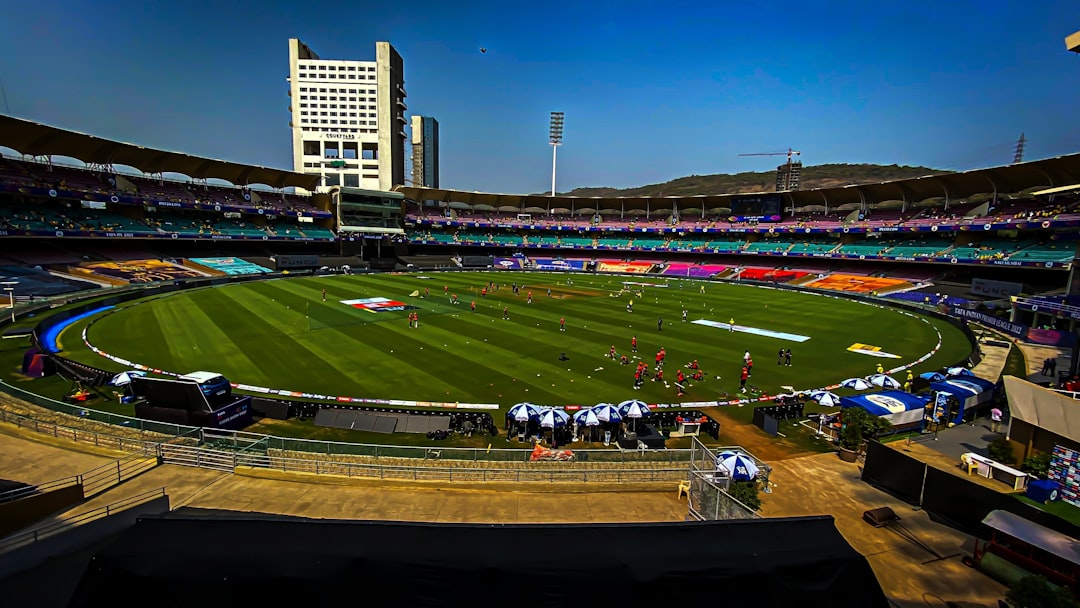
Cricket broadcasting is entering a new era where live streaming is no longer one-size-fits-all. The next winning product will feel like a personal match companion: it knows whether you care about batting tempo, bowling matchups, fantasy points, or wicket celebrations, and it adapts the feed in real time. That shift is why AI matters so much now. As live digital audiences grow more demanding, broadcasters that build streaming-first audience experiences and back them with smart data systems will create stronger retention, better monetization, and deeper fan loyalty.
The opportunity is bigger than just adding an AI chatbot or a few automated captions. Cricket broadcasters can design personalized feeds that swap camera angles, surface fantasy overlays, and auto-build highlight reels by viewer behavior. That means a fantasy player may see strike-rate pressure, death-over economy, and captaincy upside; a casual fan may get a simplified story with momentum graphs and key moments; and a superfan may choose ultra-detailed tactical panels with wagon-wheel patterns and pitch maps. In other words, the broadcast becomes adaptive, not static. For the operational side of that shift, it helps to think like teams that have mastered real-time messaging integrations and observability in feature deployment: the product only works if the delivery layer is resilient, measurable, and responsive under match-day load.
This guide breaks down the concrete product ideas, the required tech stack, the editorial and data workflows, and the revenue models that can turn AI-powered live streaming into a durable business. It also shows how to keep the fan experience trustworthy and genuinely useful, which is essential in a category where attention is intense and switching costs are low. If you want a wider perspective on how sports content teams optimize output under pressure, the playbook in optimizing content delivery offers useful parallels.
1) Why Personalized Cricket Feeds Are the Next Big Fan Engagement Layer
1.1 Cricket audiences are not one audience
Cricket fans are fragmented by format, region, intent, and depth of interest. A Test-match traditionalist wants field settings, bowler spells, and session control, while a T20 fantasy player wants boundary frequency, bowling matchups, and projected points. A broadcaster that treats all viewers the same leaves value on the table because each fan is effectively asking a different question of the same live event. That is exactly where AI-driven personalization can create a material upgrade in viewer engagement.
Broadcast history has always shown that context wins attention. In the same way modern digital teams study audience pathways through answer engine optimization and content intent, cricket broadcasters should design feeds around viewer goals. If the goal is fantasy performance, the screen should prioritize actionable stats. If the goal is emotional excitement, the feed should surface key moments instantly and minimize clutter.
1.2 Personalization improves retention, not just novelty
Personalized feeds are not just a gimmick. They reduce friction, shorten the path to meaningful moments, and keep viewers inside the ecosystem longer. When a user can jump into a “wickets-only” mode, a “batting collapse” mode, or a “fantasy captain radar” mode, the platform begins to feel like a utility rather than a generic video player. That creates more repeat visits and better session depth, especially during tournaments with packed schedules.
For media businesses, this matters because live streaming monetization depends on session time, ad inventory quality, and the ability to sell premium access. Teams that already think in terms of content timing, event packaging, and recurring formats can learn from modular motion graphics systems that keep production scalable while preserving brand consistency.
1.3 AI personalization becomes more valuable as content volume increases
The more matches, innings, clips, and stat layers a platform produces, the harder it becomes for fans to find what matters quickly. AI can act like the sorting engine behind the product, recommending what to watch now, what to rewatch later, and what to skim. This is especially powerful in tournaments where multiple matches run back-to-back and highlight overload becomes a real problem. The key is not more content; the key is better curation.
That logic mirrors how publishers use data to transform raw input into audience value. For a broader lesson in turning messy inputs into useful outputs, see the role of data in journalism. Cricket broadcasters can apply the same discipline to ball-by-ball events, player tracking, and contextual metadata.
2) Three Product Ideas That Can Reshape Cricket Broadcasting
2.1 Multi-angle feeds tailored to viewer preferences
The first product idea is the most visible: let viewers choose from multiple camera angles, but make those angles intelligent. A standard broadcast might offer the main feed, a batting end feed, a behind-the-bowler feed, a boundary cam, and a DRS-style tactical view. AI can learn which angle a viewer watches most during specific match situations and then prioritize that angle automatically. For example, a viewer who rewatches wickets might be nudged toward a bowler-end angle the next time a new batter arrives.
This should go beyond manual camera switching. AI can predict high-value moments by using match state, player tendencies, and context such as over number, batting hand matchups, and venue patterns. Think of it as a real-time director that helps viewers follow the story they care about most. Broadcasters looking at deeper personalization strategies can borrow useful thinking from viral product prediction trends and adapt them to live sports behavior.
2.2 Fantasy overlays customized to player intent
The second product is a fantasy overlay layer that changes depending on a viewer’s team composition. If a user owns a particular batter, the screen can surface strike rate, boundary percentage, and dismissal risk against the current bowler. If they own a spinner, the overlay can highlight matchup history, economy under pressure, and the likelihood of middle-overs wickets. This is a powerful retention engine because it makes every ball feel materially relevant to the user’s fantasy outcome.
Done well, fantasy overlays should feel lightweight and fast. They should not bury the match under clutter. They should appear contextually, such as after a wicket, before a new over, or when the user taps an “insights” toggle. The workflow is similar to how businesses use tech-driven analytics for improved attribution: the system must connect an event to an outcome in a way users instantly understand.
2.3 AI-curated highlight reels by fan profile
The third product idea is perhaps the easiest to scale and the most commercially valuable: auto-generated highlight reels. A fantasy-focused fan may receive a reel of relevant points events. A pace-bowling enthusiast may get a strike-zone reel. A casual fan may get a “big moments” reel with wickets, sixes, and momentum swings. AI can compile these within minutes, or even near-real time, using event classification and scene understanding.
Broadcasters that want to improve post-match engagement should think of highlights as a personalization engine, not just an archive. The goal is to convert live emotion into reusable content that drives return visits. That approach is consistent with how modern creators use AI agents for creators to automate planning, packaging, and optimization across formats.
3) What the Core Tech Stack Must Include
3.1 Fast data ingestion and event tagging
Personalized live streaming starts with reliable data capture. Every ball, wicket, overthrow, boundary, review, and substitution needs to be ingested as structured event data with low latency. Ideally, the data layer should combine score feeds, tracking feeds, video timestamps, and editorial tagging so the AI system can align what happened with when it happened on screen. Without that alignment, overlays drift, clip generation becomes inaccurate, and trust collapses.
At tournament scale, the infrastructure must be built for spikes. Match starts, collapse phases, super overs, and final overs create enormous bursts of traffic and interaction. That is why capacity planning matters as much as model quality. The same principles used in predicting DNS traffic spikes apply here: prepare for traffic volatility, cache aggressively, and architect for rapid fallback.
3.2 Recommendation and personalization engines
The recommendation layer is what turns raw data into a custom feed. It should include collaborative filtering, content-based signals, session-based predictions, and match-state rules. A hybrid approach works best because cricket viewing behavior is shaped by both long-term preferences and immediate game context. If a user always watches death overs, the system should remember that. If that same user is currently watching a chase scenario with a required run rate spike, the feed should adapt instantly.
Teams should also define explicit preference centers so viewers can control personalization. This improves trust and helps the system learn faster. For implementation teams, the design philosophy resembles choosing the right stack without lock-in, similar to the thinking in choosing the right stack.
3.3 Video orchestration, overlays, and rendering
To make personalized feeds feel smooth, broadcasters need a video orchestration layer that can manage stream variants, overlays, and captions without adding delay. This layer should support adaptive bitrate delivery, fast switching between angles, and overlay rendering at the edge or close to the player. The more this happens in distributed infrastructure, the less likely the experience is to stutter during peak moments.
For broadcasting teams, this is not unlike the discipline required in edge hosting demand. Match-day experiences benefit when compute sits close to the viewer, especially for features like live overlays and instant clip assembly.
4) How AI Should Power the Fan Experience Without Overcomplicating It
4.1 Contextual insight, not dashboard overload
The mistake many products make is showing every statistic because the system can. Fans do not need a wall of numbers; they need the right two or three signals at the right time. AI should infer which stats matter in the present moment and suppress the rest. A chase on a tricky pitch might need run-rate pressure, boundary droughts, and batter-bowler matchup history. A powerplay wicket burst might need dismissal probability and swing conditions.
Good AI in sports broadcasting behaves like a great analyst in the commentary box: sharp, timely, and selective. It reminds viewers what just changed, why it matters, and what to watch next. For teams interested in safe and responsible automation, the cautionary perspective in building safer AI agents is worth studying because it reinforces guardrails, approvals, and failure handling.
4.2 Natural-language summaries for second-screen users
Many viewers are not watching every ball, especially on mobile. AI can generate concise updates like “India’s scoring rate has dipped from 9.8 to 7.1 since the bowling change” or “This batter has attacked 71% of deliveries from seam since over 12.” These summaries can power push notifications, live tickers, and second-screen widgets. The value is not in sounding smart; it is in making the game easier to follow.
If your product serves global audiences, multilingual delivery matters too. Automatic translation and regional phrasing can expand reach dramatically, especially in cricket markets with mixed-language audiences. The principles behind multilingual developer collaboration can be adapted to fan-facing language layers.
4.3 Automated clip discovery and highlight ranking
Highlight automation works best when AI scores each moment on multiple dimensions: excitement, rarity, match impact, social shareability, and fan preference match. A wicket off a yorker in the final over may score high on all five. A tidy maiden over in the fifth over may score high only for niche audiences. That ranking system determines what gets clipped, what gets pushed, and what gets buried.
Broadcasters should also build a human editorial review path for premium matches and major finals. Automation can identify, but editors should approve, refine, and contextualize the most important moments. That balanced workflow is consistent with the trust-focused principles in navigating ethical considerations in digital content creation.
5) Viewer Segments: What Different Fans Actually Want
5.1 Fantasy players want prediction-friendly context
Fantasy players are among the most monetizable audience segments because they are already thinking in probabilities. They care about role certainty, matchup advantage, and opportunity volume. A personalized feed for them should emphasize projected balls faced, overs likely to be bowled, batting order stability, and bowling spell utilization. The key is to convert broadcast data into decision support.
When fantasy overlays are linked to real-time match events, the platform becomes more sticky. One strong design pattern is to surface a “fantasy value spike” whenever a player’s role changes meaningfully, such as a promoted pinch-hitter or a bowler being held back for the death overs. That type of product logic resembles the broader trend of AI-assisted decision making in consumer platforms.
5.2 Casual fans want clarity and pace
Casual fans are not looking for dense analytics. They want to know who is ahead, what just happened, and whether the match is about to turn. For them, a simplified stream with instant summaries, key clips, and clean score context is best. If the interface is too tactical, they will abandon the feed quickly and return only for the scoreline.
That’s why personalization should include UI simplicity, not just data depth. A casual viewer may prefer a “story mode” overlay that tells them momentum shifts in plain English. This is a strong way to build viewer engagement because it respects limited attention and reduces confusion.
5.3 Superfans and tacticians want depth
Superfans, analysts, and coaches value field maps, wagon wheels, phase charts, pressure indexes, and expected wickets. They are willing to spend more time in the app if the data layer is credible and rich. For this segment, AI should enhance depth rather than simplify it away. Give them toggles for pitch zones, bowler plans, matchups, and historical comparisons.
These users are also ideal for premium subscriptions because they are most likely to appreciate advanced features. Their behavior mirrors other high-intent digital audiences who seek deeper control and more precise outputs, much like users in privacy-first analytics systems who value transparency and actionable measurement.
6) Monetization Models That Make the Product Pay
6.1 Premium personalization tiers
The most obvious revenue model is a freemium-plus-premium structure. Basic live streaming remains available to all users, while premium tiers unlock multi-angle access, fantasy overlays, advanced stats, ad-light viewing, and AI highlight packs. The trick is to price features by real user value, not by internal cost alone. Fantasy-heavy audiences may pay for data-rich overlays, while casual users may pay for ad-free replay bundles.
For pricing strategy, broadcasters should test bundles the way ecommerce teams test discounts and offers. The logic is similar to evaluating software tools: users will pay when the perceived lift in convenience and performance is obvious.
6.2 Sponsor-backed overlays and branded moments
Sponsors can underwrite specific feature layers, especially if those layers are contextually relevant. A fantasy overlay might be sponsored by a betting-adjacent but compliant partner in regulated markets, while a highlight reel could carry a branded intro or outro. The safest version of this model is value-aligned sponsorship: the sponsor supports the utility but does not distort the insight.
Ad attribution becomes much stronger when the broadcaster can connect feature usage to click-through, conversion, or retention. That is where the lessons from ad attribution analytics are useful. If a sponsor funds a “key wickets” reel, the platform should know how many users viewed it, shared it, and returned to it later.
6.3 Commerce, memberships, and collectibles
Personalized match feeds also open the door to merchandise and membership commerce. A fan who follows a specific player or team can be shown timely jersey drops, limited-edition collectibles, or match-worn merchandise after a signature performance. The key is not to interrupt the live experience, but to extend it when emotional intensity is highest.
This is especially powerful when paired with membership perks such as exclusive clips, early access to highlights, or behind-the-scenes audio. As the platform matures, the business can diversify into digital memberships and physical commerce, similar to the broader shift in embedded monetization discussed in embedded commerce models.
7) Operational Risks Broadcasters Must Solve Early
7.1 Latency is the enemy of trust
If overlays arrive late, if a wicket is clipped after the next ball begins, or if a personalized feed lags behind the main stream, users lose confidence fast. Cricket fans compare feeds with each other, especially in group chats, so even a small delay becomes visible. That means broadcasters need synchronized ingest, cached delivery, and graceful degradation if models fail.
Match-day reliability planning should be treated like infrastructure for a critical event, not a casual media rollout. This is why disaster recovery thinking is relevant even in live sports media: the cost of failure is audience churn, not just technical debt.
7.2 AI hallucination and bad labeling must be controlled
A cricket broadcaster cannot afford incorrect labels on wickets, milestones, or fantasy point events. A misread boundary, a mistaken dismissal attribute, or an incorrect bowler classification can damage trust with both fans and partners. Every AI-generated insight should be auditable, and high-stakes outputs should pass validation rules before being shown publicly.
Editorial safeguards matter because cricket is both emotional and statistical. If the model makes a mistake during a final, the error may spread instantly through social channels. Teams should therefore adopt layered review systems and exception handling. For a useful reference point on responsible system design, see privacy, ethics, and procurement guidance.
7.3 Cost control matters as much as feature quality
AI personalization can become expensive quickly if every viewer session triggers heavy inference, video processing, and clip generation. Broadcasters need a tiered compute model that reserves the most expensive operations for high-intent users or premium subscribers. Edge caching, batch pre-computation, and event-triggered inference can all help reduce waste.
Cost discipline is the difference between an impressive demo and a profitable product. In practice, teams should watch unit economics at the session level: cost per watch minute, cost per generated clip, and revenue per engaged user. For another example of future-proof cost planning, the approach in future-proof subscription tools is highly relevant.
8) A Practical Roadmap for Launching Personalized Feeds
8.1 Start with one high-value use case
Do not launch all personalization features at once. Start with one clear audience and one measurable outcome. For most cricket broadcasters, the best initial use case is fantasy overlays during live matches, because it connects directly to viewer intent and is easy to measure. Once the product proves retention lift, you can expand into angle switching and AI highlight reels.
A phased rollout is also operationally safer. Begin with a feature flag, a small percentage of users, and a clear rollback plan. This mirrors the controlled release mindset found in feature deployment observability.
8.2 Define the metrics that matter
Measure more than total views. Track average session length, feature adoption rate, highlight replay rate, fantasy overlay engagement, subscription conversion, sponsor click-through, and churn after first use. You should also track negative signals such as latency complaints, exit rates after UI changes, and clip rejection by editors. Good analytics should show whether personalization actually improves the match experience.
If the product is working, fans should watch longer, return more often, and interact more with contextual features. They should also feel that the feed “gets them.” That is the real KPI. For measurement inspiration, teams can learn from privacy-first web analytics frameworks that balance insights with user trust.
8.3 Build for editorial + machine collaboration
The best cricket products will not be fully automated; they will be collaboratively automated. Editors should define the rules of what matters, while AI handles scale, speed, and personalization. The newsroom-style workflow is powerful because it keeps the platform accurate while allowing faster output during live play. Think of AI as an amplifier, not a replacement.
That balance is what separates gimmicks from sustainable fan products. It also mirrors the best practices used by high-performing content teams, including those focused on scalable storytelling and repeatable packaging. If you want a broader analogy, large media strategy shows why repeatable systems outperform one-off experiments.
9) Data, Privacy, and Trust: The Non-Negotiables
9.1 Personalization must be transparent
When a viewer sees a customized feed, they should know why certain content appears. Preference dashboards, explainers, and opt-outs improve trust and reduce regulatory friction. This is especially important if the broadcaster uses behavior data, fantasy team data, or location-based personalization. Fans are more willing to share data when the benefit is obvious and the control is real.
Transparency also supports long-term brand health. In a market where sports media companies compete for attention and trust, explainable personalization is a differentiator. Teams can borrow useful process discipline from ethical content creation and adapt it for viewer-facing AI.
9.2 Use privacy-safe segmentation
Not every personalization system needs deep personal data. Many powerful experiences can be built from session behavior, coarse audience segments, and on-device preferences. The more a broadcaster can minimize sensitive data exposure, the safer the system becomes. This is good for compliance, but it is also good product design because it reduces unnecessary complexity.
In markets with stricter digital regulation and payments scrutiny, the compliance architecture must be planned early. For a related lens on platform policy and monetization risk, see regulatory changes in digital payment platforms.
9.3 Keep a human editorial voice in the loop
AI can summarize a match, but it should not erase the voice of the broadcaster. Fans still want judgment, phrasing, personality, and a sense that the platform understands cricket culture. The winning formula is AI precision plus editorial taste. That combination helps the feed feel alive instead of mechanical.
This is especially important in live sports, where story, emotion, and timing matter as much as statistics. A good personalized product should feel like it was built by people who love the game, not just people who love machine learning. That fan-first mindset is the foundation of durable viewer engagement.
10) The Business Case: Why This Will Win in Cricket
10.1 Better experiences create better economics
When fans get value faster, they stay longer. When they stay longer, broadcasters gain more ad impressions, more subscription upside, and more opportunities for commerce. Personalized feeds also reduce content waste because viewers spend less time searching and more time watching. That makes every minute of production more productive.
The business case is strongest when AI features are tied to explicit audience jobs-to-be-done. Fantasy users want signals, casual fans want clarity, and superfans want control. Build around those needs and the revenue follows. For brands exploring monetization efficiency, the strategy resembles value-sensitive purchasing behavior: the product must justify itself quickly.
10.2 The winning broadcaster becomes a platform
Personalized live streaming transforms broadcasters from passive distributors into interactive platforms. That shift unlocks multiple surfaces: live video, second-screen insights, social clips, community posts, and commerce moments. It also creates a data flywheel, because every engagement teaches the system how fans behave. The more the system learns, the more relevant it becomes.
For cricket, this is especially powerful because the game naturally creates discrete moments of tension and release. Those moments are ideal for AI-triggered overlays, clip generation, and contextual offers. A broadcaster that captures them well will feel indispensable.
10.3 This is the future of fan-first cricket media
The future is not merely “watch the match.” It is “watch the match your way.” That means choosing angles, receiving the stats that matter, and revisiting the moments that fit your fandom profile. AI makes that future feasible at scale, but only if broadcasters invest in reliable architecture, transparent personalization, and clear monetization design. The companies that do this well will own more than attention; they will own habit.
Pro Tip: If you are launching your first AI-powered cricket product, start with one overlay and one audience segment. Prove retention lift before expanding into multi-angle feeds and automated highlights. The smartest rollout is the one that lets the data tell you where the real fan value is.
Comparison Table: Personalized Feed Features, Tech Needs, and Revenue Fit
| Feature | Best For | Core Tech Required | Primary KPI | Revenue Fit |
|---|---|---|---|---|
| Multi-angle live feeds | Superfans, tacticians | Low-latency video switching, edge delivery, camera metadata | Watch time per session | Premium subscriptions, sponsored angles |
| Fantasy overlays | Fantasy players | Real-time stats engine, player-event tagging, personalization rules | Overlay engagement rate | Premium upsells, sponsor-backed insights |
| AI highlight reels | Casual fans, social audiences | Event detection, clip ranking, automated rendering | Replay rate | Ad-supported clips, membership perks |
| Contextual commentary summaries | Mobile and second-screen users | NLP generation, translation layer, notification service | Notification open rate | Retention, sponsorship inventory |
| Personalized match hubs | All segments | Recommendation engine, user preference center, analytics | Return visits | Subscription bundles, commerce |
Frequently Asked Questions
How can cricket broadcasters personalize live streams without making the experience confusing?
Start with a simple preference model and one or two visible options, such as fantasy overlays or alternate camera angles. Keep the main feed intact and let personalization appear as a toggle or contextual layer. Fans should always feel in control, and the system should default to clarity over complexity.
What AI feature should broadcasters launch first?
For most platforms, fantasy overlays are the best first step because they connect directly to a measurable use case and can be rolled out without rebuilding the entire video experience. They also create clear monetization opportunities through subscriptions and sponsorship. Once that works, expand into multi-angle switching and highlight automation.
How do AI highlight reels stay accurate?
They need structured event tagging, timestamp synchronization, and a human review layer for premium content. The AI should rank moments by importance, but editorial validation should protect against labeling errors. Accuracy is essential because live sports trust can disappear quickly after one wrong clip.
Can personalized feeds work for casual cricket fans?
Yes, and they may actually help casual fans most. These viewers often need simpler summaries, fewer stats, and faster access to key moments. A lightweight “story mode” or “big moments” mode can make the match much easier to follow.
What is the biggest technical risk in AI-powered cricket streaming?
Latency and synchronization are the biggest risks. If overlays, clips, or feed switches lag behind the live action, users will notice immediately. Broadcasters need resilient infrastructure, observability, and fallback plans to keep the experience stable during peak match moments.
How do broadcasters monetize personalized feeds?
They can use premium subscriptions, sponsor-backed overlays, branded highlight reels, and commerce moments tied to player or team momentum. The best models add value rather than interrupting the live experience. Monetization works best when the feature is genuinely useful to the fan.
Related Reading
- How small sellers use AI to decide what to make - Useful for understanding preference-driven product logic.
- Monitoring and troubleshooting real-time messaging integrations - Helpful for low-latency delivery systems.
- Building a culture of observability in feature deployment - Great for safe rollouts and match-day reliability.
- Privacy-first web analytics for hosted sites - Relevant to trustworthy measurement and segmentation.
- How to build a modular motion graphics system - Useful for scalable overlays and broadcast branding.